Case Study — OTT / Connected TV
CBS Sports HQ
A new live channel entered an on-demand video app, forcing one home screen to support both experiences.

A new live channel entered an on-demand video app, forcing one home screen to support both experiences.
TribalScale brought me in as Lead Product Designer to shape the CBS Sports HQ app experience while the broadcasters tested and launched the channel.
Another designer and I led interaction design and motion within a larger cross-platform team. I handled user flows, wireframes, high-fidelity UI, and prototypes, and I led walkthroughs with platform leads and presentations to stakeholders.
Team, tools & scope
The old CBS Sports app offered only on-demand content, and CBS data showed a high drop-off rate.
CBS Sports HQ added something the app had never carried: a live, 24/7 broadcast network. The product had to run on CBS Sports' existing architecture and feature a cinematic live experience at its center. The team found that too much on-demand content on screen at once created decision paralysis and drove users out of the app.
Challenges
I worked with platform leads to identify technical limitations. The design team created wireframes to draft the user experience, using CBS's drop-off data and a competitive analysis of live TV news channels.
I studied how live news channels show a broadcast alongside other on-screen content, and I mapped scenarios for both new and returning viewers across the connected TV experience.
Start with user flows and wireframes. I mapped the basic user journey, then created a live-first model that worked like surfing live TV and suggested relevant content.
Inviting engineering to the table. I walked each technical platform lead through the initial wireframes. Their feedback on what was possible helped remove features before development began.
Rebuild after executive feedback. CBS executives outside the project team reviewed the full-screen live home screen before launch. They saw it showed only the full-screen live channel, with on-demand highlights hidden behind it. With this feedback, I redesigned the home screen to use a collapsed video and created a prototype in InVision and Principle.
Sprint refinements. After launching the Apple TV MVP, I used early-adopter feedback to refine the designs in sprints. This improved the Roku and Amazon Fire TV experiences.
A live-first home screen with the channel playing in a collapsed window and on-demand highlights one move away.
Picture-in-picture lets viewers watch the live broadcast while browsing highlights. This feels like surfing live TV, suggests relevant content, and works the same way on every platform.
Collapsing the video meant giving up the full-screen experience. But it let viewers see more options and take more control of what to watch next.
What was delivered
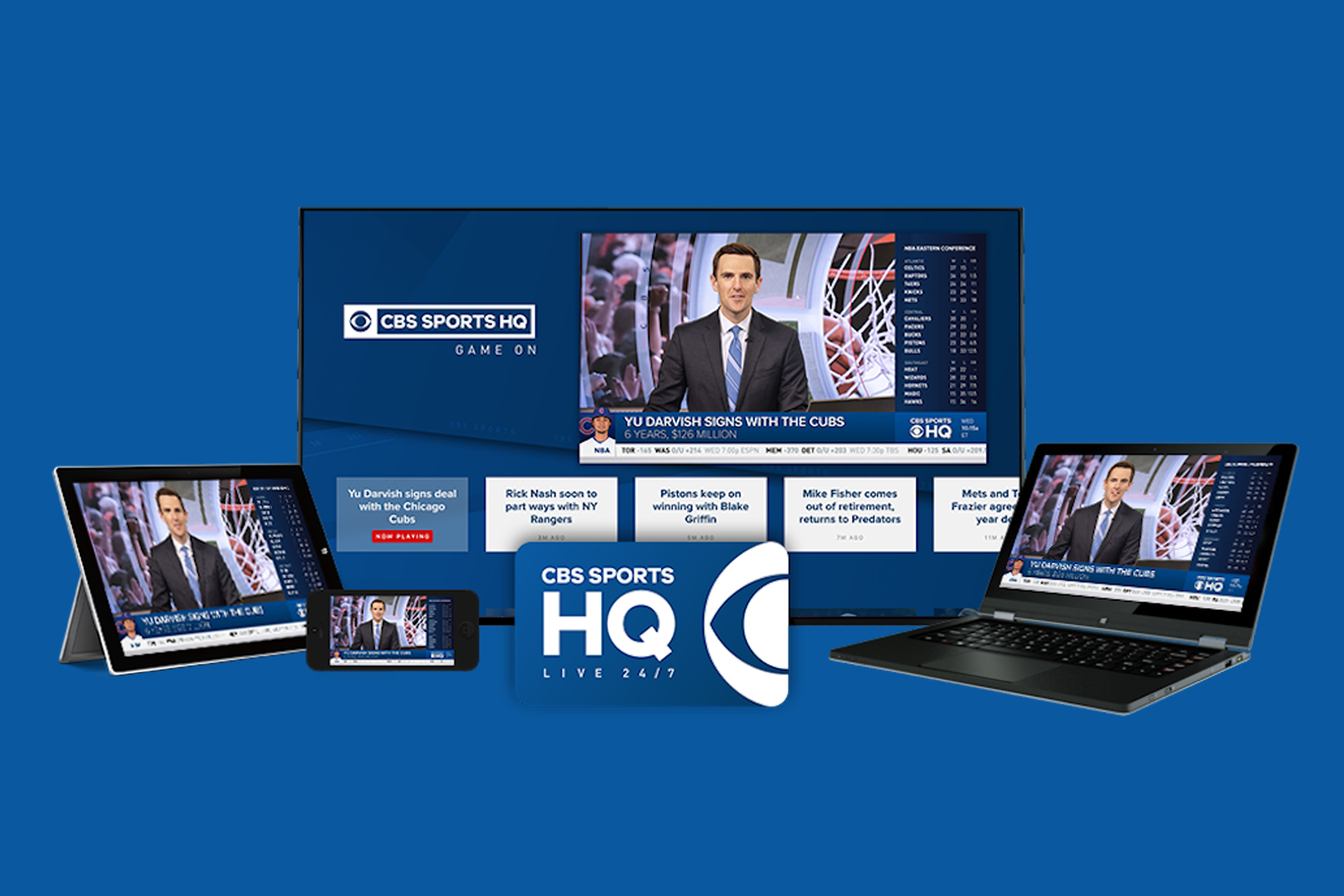
The live channel and the app launched together on February 26, 2018.
After launch, CBS's engineering team took over the product for ongoing updates and development.
CBS reported channel growth in 2019. I don't have subscriber numbers because the company doesn't want to disclose them. But here’s what the company can publicly disclose:
What worked
I worked alongside the broadcasters as they tested and launched the network, which helped the app and the channel launch at the same time.
What I'd do differently
If I could do it again, I would share proof-of-concept work with CBS leadership earlier and more often. That way, executives would provide feedback at the wireframe stage instead of after the high-fidelity designs.
What I learned
I learned the value of collaborating closely with engineering and stakeholders to adapt to technical constraints and shifting requirements. Early, frequent feedback helped refine the product, while cross-platform consistency and balancing live and on-demand experiences drove user engagement.