Case Study — 0→1 Product Strategy & Research
Home
From founder idea to tested product strategy, brand positioning, and hiring roadmap in 8 weeks.
From founder idea to tested product strategy, brand positioning, and hiring roadmap in 8 weeks.
I led research, concept testing, and prototyping alongside a visual designer and strategist from Renga.
The 8 week engagement spanned discovery to a MVP prototype. Each research decision informed the next: survey respondents fed interviews, interviews shaped concepts, concepts were tested against survey segments.
Scope and methods
First-time homebuyers encounter two distinct challenges, each requiring a separate solution. Unfortunately, no single product can address both issues simultaneously.
The market has financial products (savings apps, mortgage calculators) and advice products (blogs, podcasts, broker consultations). Survey respondents employed various tools, yet they expressed confusion and frustration due to the cognitive load of integrating them.
Anxiety about the purchasing process persisted across all segments, even among high-income buyers who were apprehensive about making the wrong decision.
Why it hadn't been solved
I fielded a 32-person survey of first-time homebuyers, then recruited follow-up interviews from respondents. The survey segmented buyers by financial stage (saving, ready, financing) and explored their emotional and practical needs in each phase.
The insight that shifted the project's direction: buyers wanted both financial optimization and emotional validation, but they weren't looking for these as separate features. They wanted a single voice they could trust across both domains. That meant positioning was as important as product design.
What the research revealed
Survey and segment interviews. I designed and fielded a 32-person survey, then recruited follow-up interviews from respondents. This compressed discovery and ensured qualitative findings were grounded in a broader sample rather than anecdotal.
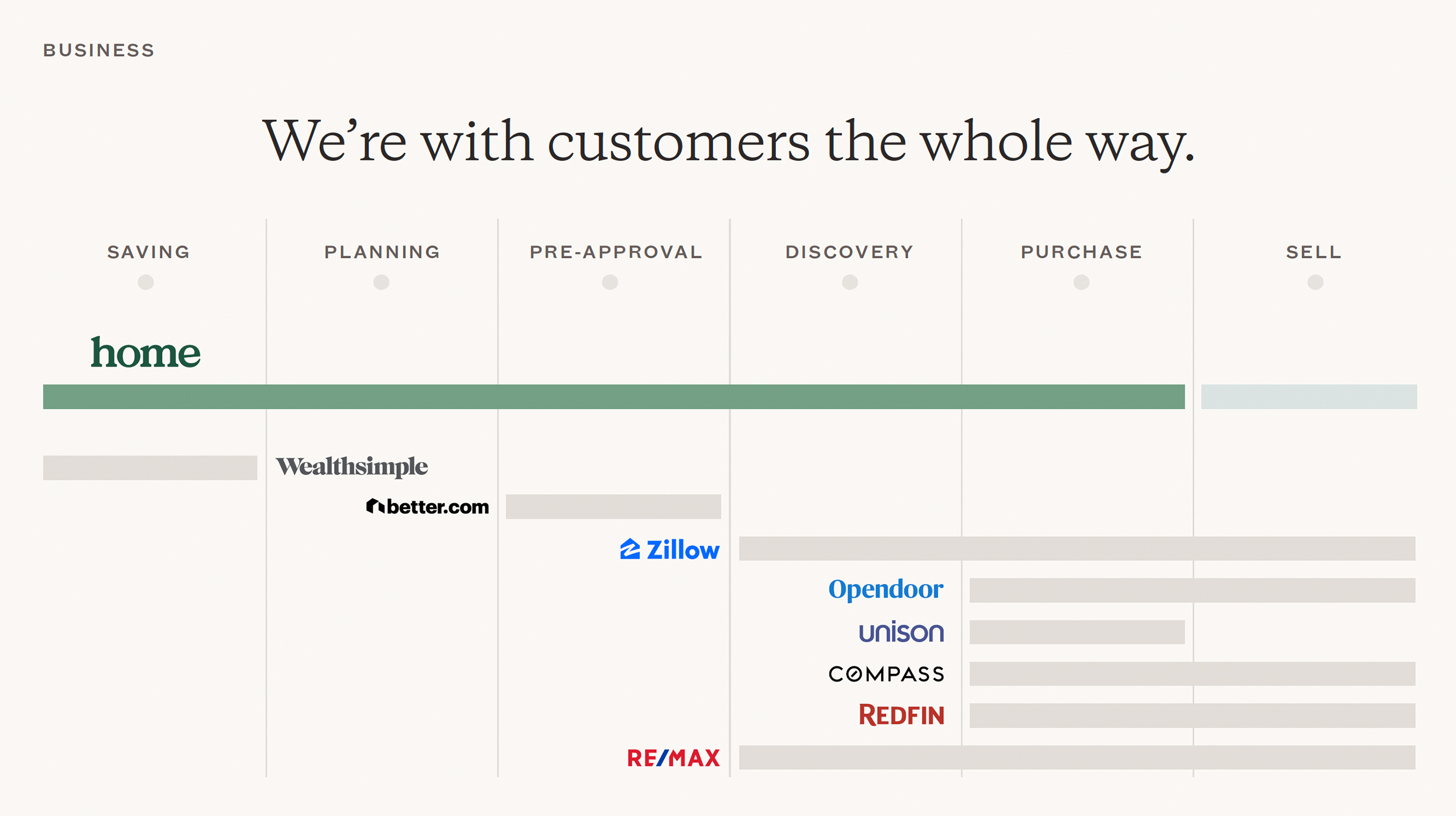
Competitive and positioning workshops. Mapped four competitors on financial sophistication and emotional positioning axes, then workshopped Home's differentiation with the founder and strategy team. Positioning shaped everything downstream.
Concept testing and iteration. Built three messaging approaches and tested each against the survey segments. Refined positioning based on which framing resonated most. Prototyped the core interaction (personalized question flow) and validated it with respondents.
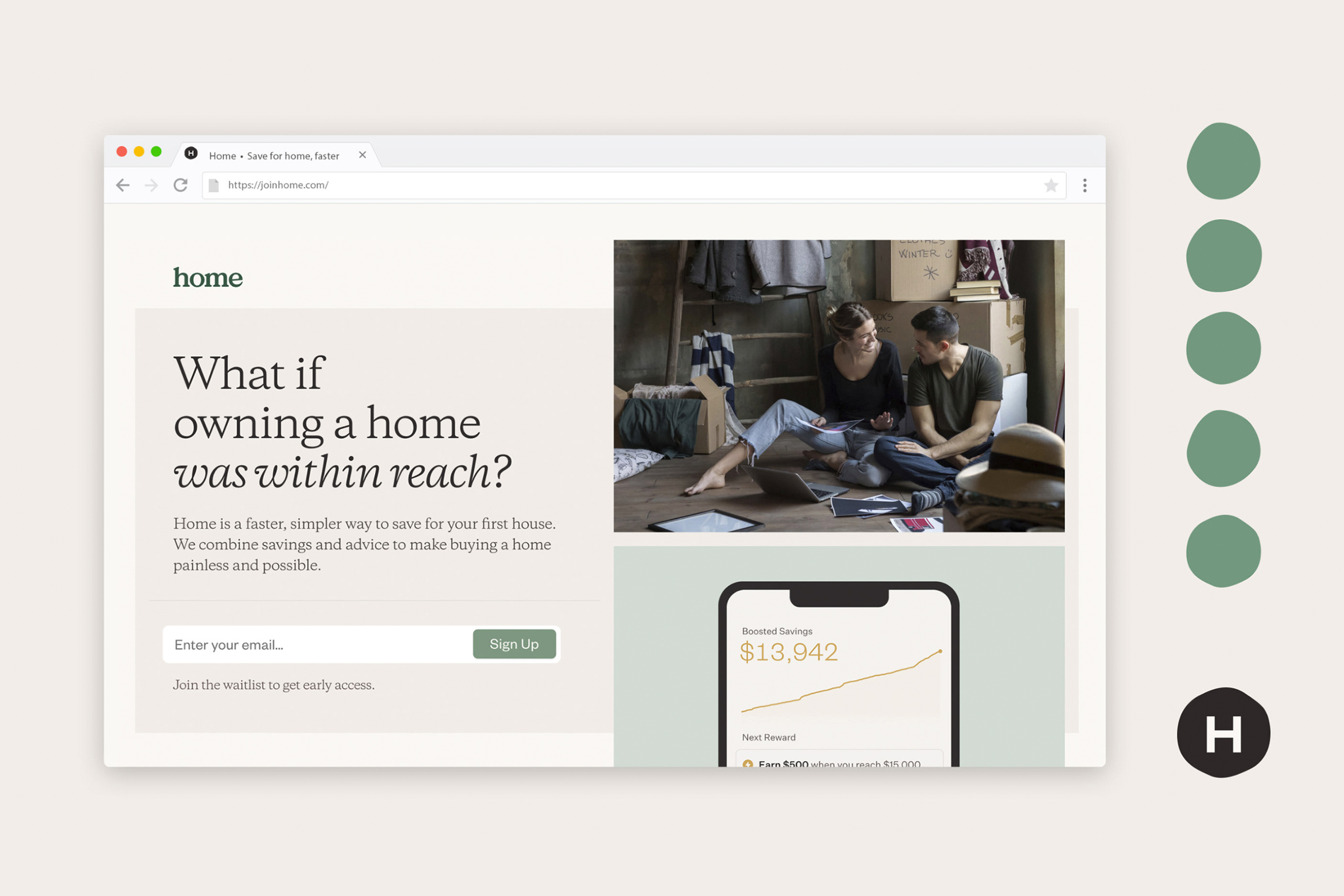
Waitlist landing page and investor readiness. Designed and launched a waitlist page to test messaging before any product existed. Created final prototype and documentation the founder could use to brief the incoming team and fundraise.
Home combines savings tools and buying advice under one positioning: speaking to a friend on the path to homeownership.
The core interaction is a personalized question flow that sequences content based on where buyers are financially and emotionally. The positioning met buyers' actual anxieties head-on rather than minimizing them — a differentiation from competitors focused purely on optimization or reassurance.
What was delivered
The founder went from needing an agency to prove the idea, to needing a team to build it.
Home was launched with a clear direction defined in 8 weeks. It focused on combining savings and advice, using a personalized question flow to guide customers to the appropriate tools. The branding and research informed the investor deck.
Outcomes
What worked
We prioritized research over assumptions. Letting real user needs reshape the project's direction made the recommendation credible. Using survey respondents for interviews streamlined concept testing — we could validate findings against a known segment rather than chasing new voices.
What I'd do differently
I would pair network-sourced survey respondents with a screened panel. While it’s fast and free at eight weeks, it’s not defensible. Additionally, I would instrument the waitlist page from the very beginning as it generates data.
What I learned
In a 0→1 engagement, the deliverable isn't the prototype. It's the client's ability to continue without you. This project's measure of success was that the founder could hire a team, write job descriptions, and defend the direction in a room I wasn't in.